Introduction
Hydraulic pumps are the "heart" of heavy machinery, powering excavators, loaders, and bulldozers. As critical components, they account for 30–40% of hydraulic system failures and often require high-cost replacements. Extending their service life directly reduces downtime, cuts maintenance costs, and improves operational profitability. Based on industry standards and field data, here are the 10 most effective best practices.
Install High-Efficiency Filters: Use 10-micron return-line filters and 3-micron pressure-line filters.
Regular Fluid Analysis: Conduct oil sampling every 500 operating hours. Replace fluid if particle count exceeds ISO 18/16/13.
Seal Inspection: Check shaft seals and O-rings monthly. Replace immediately if cracks or leaks are found.
Temperature Range: Keep oil temperature between 40°C and 60°C.
Cooling System Check: Clean radiators and cooling fins weekly. Ensure cooling fans operate properly.
Avoid Overheating: If temperature exceeds 80°C, shut down immediately to prevent thermal breakdown of fluid.
Prime Before Startup: Ensure the pump is fully filled with oil to prevent cavitation.
Break-In Period: Run new pumps at 50% load for the first 50 hours. Gradually increase to full load.
Monitor Vibration: Check for abnormal noise or vibration during break-in.
Suction Line Maintenance: Ensure suction lines are airtight and free of leaks.
Oil Level Check: Maintain proper oil level in the reservoir to prevent aeration.
Preheat in Cold Weather: Use block heaters to ensure oil viscosity before startup.
Oil Replacement: Change hydraulic oil every 2,000 hours or 12 months, whichever comes first.
Filter Replacement: Replace return-line filters every 1,000 hours.
Pump Inspection: Conduct a full inspection every 1,000 hours to check for wear and damage.
Shaft Alignment: Align pump and motor shafts within 0.05mm tolerance.
Mounting: Use rigid mounting brackets to prevent vibration and misalignment.
Pipe Size: Ensure suction lines are sized correctly to reduce flow resistance.
Pressure Relief Valve Check: Test relief valves quarterly to ensure they function correctly.
Load Management: Avoid sudden, high-load operations that can cause pressure spikes.
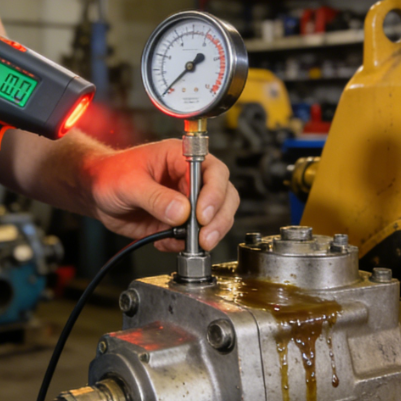
Pressure Monitoring: Install pressure gauges to monitor system pressure and detect abnormalities early.
OEM Specification: Use hydraulic oil that meets the original equipment manufacturer (OEM) specification.
Viscosity Grade: Select the correct viscosity grade based on operating temperature.
Storage: Store oil in clean, sealed containers to prevent contamination.
Shutdown Preparation: Purge the system before long-term storage.
Corrosion Protection: Coat exposed metal parts with anti-rust oil.
Sealing: Use protective caps to prevent dust and moisture from entering.
Sensor Integration: Install vibration and temperature sensors on pumps.
Real-Time Alerts: Set up alerts for abnormal vibration or temperature.
Trend Analysis: Use telematics data to predict remaining useful life (RUL) and plan maintenance.